Colon Cancer Is Getting Younger, and That Changes the Conversation
For decades, colon cancer carried a certain assumption.
It was considered something that happened later. A disease associated with aging, with retirement years, with “someday”, not something most people in their 30s or 40s ever imagined needing to think about.
But something has shifted.
Colorectal cancer is rising in adults under 50, a trend that has deeply unsettled the medical community. More and more diagnoses are occurring in people who are otherwise active, health-conscious, busy building careers, raising families, planning futures.
People who feel far too young to be hearing the word “cancer.”
This isn’t just a statistic. It’s a cultural wake-up call.
Because when a disease changes demographics, the story we tell ourselves about risk must change too.
The New Face of a Once “Older” Disease
Younger adults diagnosed with colon cancer often describe the same disbelief:
“I thought I was too young.”
“I didn’t think this applied to me.”
“I didn’t even know the symptoms.”
Colon cancer doesn’t always begin with dramatic warning signs. Early symptoms can be subtle, easily dismissed, or mistaken for far more common issues:
• Persistent bloating
• Changes in bowel habits
• Fatigue
• Abdominal discomfort
• Blood in stool (sometimes microscopic)
In younger individuals especially, these symptoms are frequently attributed to stress, IBS, diet changes, or “nothing serious.”
And sometimes, tragically, that assumption delays diagnosis.
Why Is This Happening?
This is the question researchers are urgently investigating.
While there isn’t one single cause, several modern lifestyle patterns are strongly associated with increased colorectal cancer risk:
• Diets low in fiber
• High intake of ultra-processed foods
• Chronic inflammation
• Sedentary behavior
• Disrupted microbiome health
• Excess alcohol consumption
• Metabolic dysfunction
But beyond the familiar headlines, there is a deeper and often under-appreciated layer:
The gut environment itself.
Your Colon Is Not Just a Passive Tube
The colon is an active, metabolically dynamic organ.
It houses trillions of microbes.
It regulates immune responses.
It influences inflammation.
It participates in detoxification.
When the gut microbiome is balanced and well-fed — particularly with fiber-rich foods — it produces protective compounds like short-chain fatty acids (including butyrate) that help:
• Reduce inflammation
• Support the integrity of the colon lining
• Promote healthy cell turnover
• Protect against abnormal growth
When that microbial ecosystem is disrupted, the environment shifts.
Less protection.
More irritation.
More inflammatory signaling.
Over years, that matters.
The Fiber Story We’ve Oversimplified
Fiber is often framed as a digestion tool.
Something for regularity.
Something for “gut health.”
But fiber plays a far more profound role.
Dietary fiber feeds beneficial gut bacteria, which in turn produce compounds that actively protect colon cells. Fiber also:
• Dilutes potential carcinogens
• Supports healthy bowel transit
• Reduces prolonged contact between toxins and the colon lining
• Helps regulate blood sugar and insulin
Low fiber intake doesn’t just affect comfort.
It alters the biological landscape of the colon.
And many modern diets fall dramatically short.
The Modern Diet Problem
Ultra-processed foods now make up a significant portion of many people’s daily intake.
Highly refined.
Low in fiber.
Engineered for shelf life, not microbiome health.
These foods are often:
• Nutrient diluted
• Fiber depleted
• Rich in additives and emulsifiers
• Easy to overconsume
Over time, this pattern can contribute to:
• Microbiome imbalance
• Chronic low-grade inflammation
• Metabolic stress
• Impaired gut barrier function
Again, not dramatic.
But cumulative.
Inflammation: The Quiet Contributor
Colon cancer risk is strongly associated with chronic inflammation.
Inflammation doesn’t always feel like pain. It can exist as a low-grade biological state driven by:
• Poor diet quality
• Blood sugar instability
• Gut dysbiosis
• Chronic stress
• Sleep disruption
Inflamed tissue is more vulnerable tissue.
Sedentary Living and Colon Health
The colon thrives on movement.
Regular physical activity supports:
• Healthy motility
• Reduced inflammation
• Improved insulin sensitivity
• Better immune regulation
Prolonged sitting, now a defining feature of modern life, is associated with increased colorectal cancer risk independent of exercise.
Even bodies that “work out” can suffer from too much sitting.
Preventative Care: A Conversation That Must Start Earlier
One of the most hopeful shifts in this story is the growing emphasis on prevention.
Screening guidelines have begun lowering the recommended age for colonoscopy in average-risk adults. But prevention isn’t only about medical screening.
It’s about daily, cumulative choices.
Protective Foundations for Colon Health
While no strategy guarantees prevention, research strongly supports several protective habits:
Fiber-Rich Nutrition
Aim for a diversity of plant fibers:
• Vegetables
• Fruits
• Legumes
• Whole grains
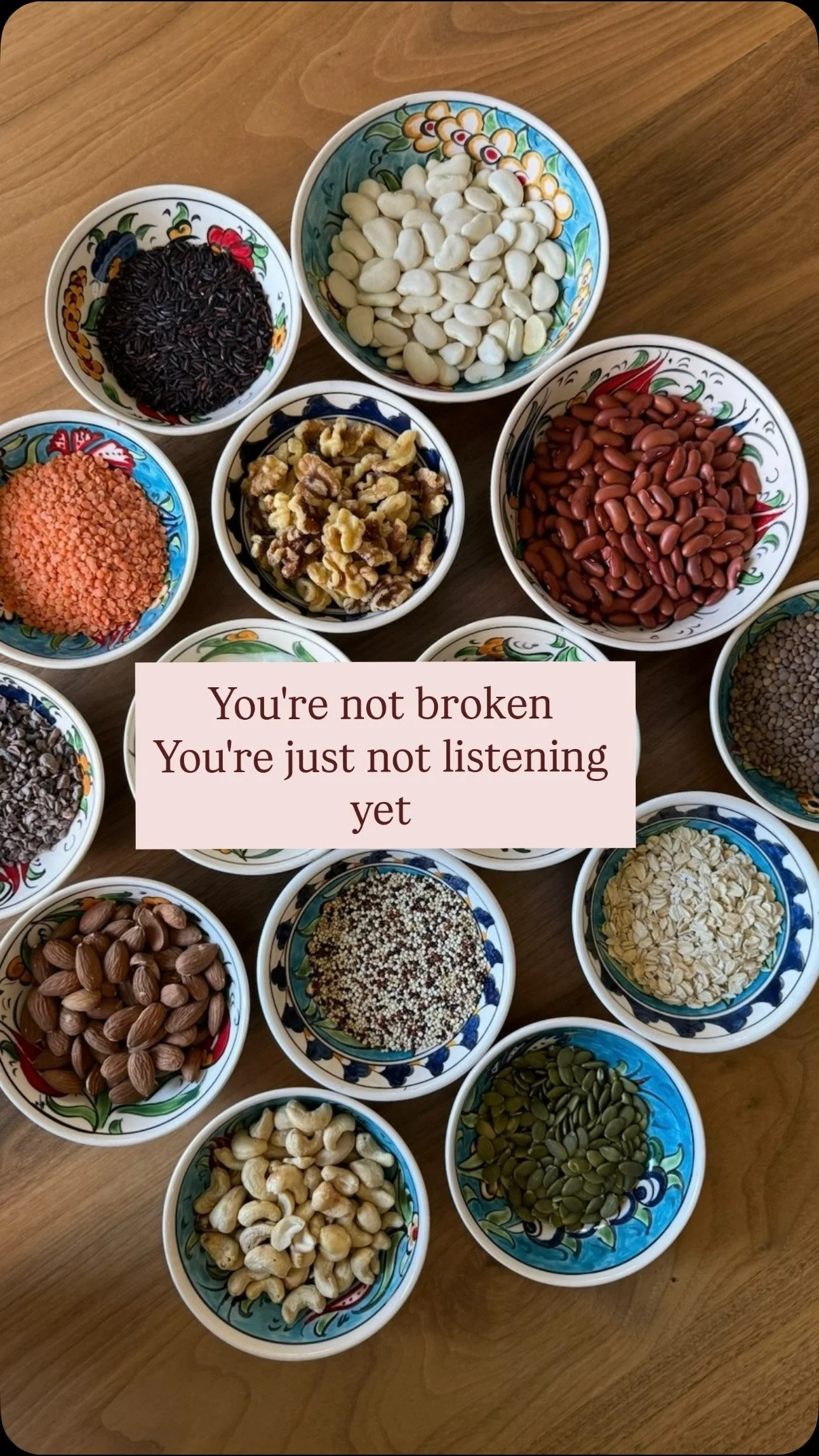
• Nuts and seeds
Variety feeds microbial diversity.
Microbiome Support
A healthy gut ecosystem is protective:
• Prebiotic fibers
• Fermented foods (if tolerated)
• Minimizing unnecessary antibiotics
• Reducing ultra-processed foods
Anti-Inflammatory Eating
Focus on:
• Colorful plants
• Omega-3 fats
• Adequate hydration
• Stable blood sugar
Movement
Daily physical activity and reducing prolonged sitting both matter.
Alcohol Awareness
Even moderate intake influences colon cancer risk.
Symptom Literacy
Persistent gut changes deserve attention, not dismissal.
The Emotional Layer We Rarely Name
There’s also something deeply human beneath this conversation.
Many younger adults diagnosed with colon cancer were not reckless. Not careless. Not ignoring their health.
They were busy.
Busy living inside modern demands, modern food systems, modern stress loads.
Which is why this conversation cannot be framed as blame.
It must be framed as awareness.
A Reframe Worth Holding
Colon cancer is not simply “bad luck” or “something that happens later.”
It is influenced by:
• Diet quality
• Microbiome health
• Inflammation
• Movement
• Metabolic stability
Which means prevention is not a single action.
It’s an ecosystem.
Closing Thought
Your colon is listening long before symptoms appear.
To what you feed it.
To how often you move.
To how much inflammation you carry.
Prevention is rarely dramatic.
It is quiet, cumulative, daily.
And profoundly powerful.
What’s Coming Next
Because this topic deserves more than a single article, we’re developing:
✨ The Colon Cancer Prevention Guide
A practical, science-grounded roadmap for protecting colon health through nutrition, microbiome support, lifestyle shifts, and early awareness.
Because this is no longer a conversation for “later.”
It’s a conversation for now.
Follow @theconsciousgut on Instagram