Why Another New Year Detox Won’t Fix Your Health… And What Will
Dry January Is a Start. Supporting Your Liver Is What Actually Creates Change.
Every January, millions of people participate in Dry January. They take alcohol off the table, hoping to reset, detox, feel lighter, clearer, and more in control of their health.
And that step matters.
But here’s what rarely gets said: Supporting your liver isn’t just about removing alcohol. It’s about nourishing the system that processes everything else.
Because even if you’re not drinking, your liver is still working around the clock handling blood sugar, hormones, medications, environmental toxins, stress hormones, food additives, microplastics, and more.
And while I may not be doing Dry January, I am deeply committed to supporting my liver. Detoxification isn’t seasonal and liver health isn’t about restriction, it’s about capacity which is exactly why I’ve created this article and my Liver Detox Protocol.
The New Year Lie: You Need to “Detox” Your Body
January arrives loud. Ads promise to “flush toxins,” “cleanse your liver,” and “reset your system” in three days or less. Juice cleanses, detox teas, extreme fasts, and punishing protocols dominate the conversation.
But here’s the truth most detox marketing ignores: Your liver doesn’t need punishment. It needs partnership. And it doesn’t need a cleanse. It is the cleanse.
If you feel sluggish, foggy, inflamed, or off after the holidays, it doesn’t mean your body failed you. It means your detox systems are overloaded and under-supported.
Meet Your Liver: The Unseen Hero of Everyday Health
Your liver is one of the most metabolically active organs in your body. Every single day, it:
Filters blood coming directly from your digestive tract
Metabolizes alcohol, medications, and hormones
Neutralizes environmental toxins and chemicals
Regulates blood sugar and cholesterol
Produces bile to digest fats and eliminate waste
Stores vitamins and minerals
Converts excess nutrients into usable energy
Synthesizes glutathione, your body’s master antioxidant
This is why liver health is inseparable from gut health, hormone balance, energy, mood, digestion, and inflammation.
So if your liver feels “off,” it’s rarely because it’s broken. It’s because it’s doing too much without enough support.
Detox Is a Daily Function, Not a 3-Day Event
Detoxification isn’t something you “do” once a year. It’s a continuous biological process.
Supporting detox means:
Providing the nutrients your liver uses to neutralize toxins
Supporting bile flow and daily elimination
Regulating blood sugar to reduce metabolic stress
Lowering inflammatory and toxic inputs
Aligning with circadian rhythm
Supporting the gut so toxins can actually leave the body
Which brings us to how detoxification actually works.
The Three Phases of Liver Detoxification
Most people only hear about detox in vague terms. In reality, liver detoxification happens in three distinct phases, and each one matters.
Phase I: Activation
In Phase I, liver enzymes (primarily cytochrome P450) break down toxins, medications, alcohol, and hormones into intermediate compounds.
Important detail: These intermediates are often more reactive and more damaging than the original toxin.
This phase requires antioxidants and micronutrients to prevent oxidative stress.
Phase II: Conjugation
In Phase II, the liver neutralizes those reactive intermediates by binding them to compounds like glutathione, sulfate, glycine, taurine, and methyl groups.
This process makes toxins water-soluble and safe for elimination.
Phase II is heavily dependent on:
Adequate protein intake
B vitamins
Sulfur-containing foods
Minerals like magnesium, zinc, and selenium
When Phase II is sluggish, people often feel “toxic,” inflamed, anxious, or foggy.
Phase III: Elimination via the Gut
Once toxins are neutralized, they must be excreted through bile and stool.
If bile flow is sluggish, fiber intake is low, hydration is poor, or bowel movements are infrequent, toxins can be reabsorbed through the gut. This is known as enterohepatic recirculation.
This is why liver health and gut health are inseparable. Detox isn’t complete until waste actually leaves the body.
What Happens When You Stop Drinking Alcohol (Weeks 1–3)
Dry January can be a powerful reset, but it helps to understand what’s happening physiologically.
Week 1
Reduced liver workload
Improved hydration
Initial blood sugar stabilization
Possible fatigue or irritability as dopamine adjusts
Week 2
Improved insulin sensitivity
Reduced liver inflammation
Better sleep architecture
Early shifts in gut microbiome balance
Week 3
Increased glutathione production
Improved bile flow
More stable energy and mood
Clearer skin and digestion for many
But alcohol is only one piece of the load. Without nourishment, fiber, protein, minerals, and nervous system regulation, many people plateau or feel stuck. This is where true liver support matters.
How to Actually Support Your Liver (No Cleanse Required)
Your liver thrives on consistency, not extremes.
Daily Liver-Supportive Foundations
Cruciferous vegetables like broccoli, cauliflower, arugula, Brussels sprouts to upregulate detox enzymes
Bitter foods like dandelion greens, artichoke, lemon to stimulate bile flow
Adequate protein to supply amino acids for Phase II detox
Reducing alcohol and refined sugar, even temporarily
Targeted herbs like milk thistle, turmeric, schisandra to support antioxidant pathways
Gut microbiome support to prevent toxin reabsorption
Sleep, especially before midnight, to align with detox rhythms
Movement and sweating to support lymphatic flow
Why Most Detoxes Fail: A Nervous System Perspective
When the nervous system is dysregulated, restriction feels unsafe. This is why extreme detoxes often backfire. They ignore biology and push deprivation instead of regulation.
True detox support feels grounding, nourishing, and sustainable. It creates safety in the body so detoxification can actually happen.
Detox Differently This Year
This year, instead of punishing your body for December, rebuild trust with it. Instead of chasing a liver cleanse, support the system that’s been cleaning up for you every day.
Your liver isn’t dirty. It’s depleted and it’s ready to be supported.
The Liver Support Protocol
The Liver Support Protocol was created to translate this science into real life. It includes:
Liver-nourishing recipes and grocery lists
Education on the liver–gut–nervous system axis
Daily rituals that support detox capacity
Lifestyle and supplement guidance where appropriate
This is not a cleanse. It’s a framework for restoring function.
Because taking your gut health seriously means supporting the organs that make digestion, detoxification, and balance possible.
And your liver deserves more than a juice fast.
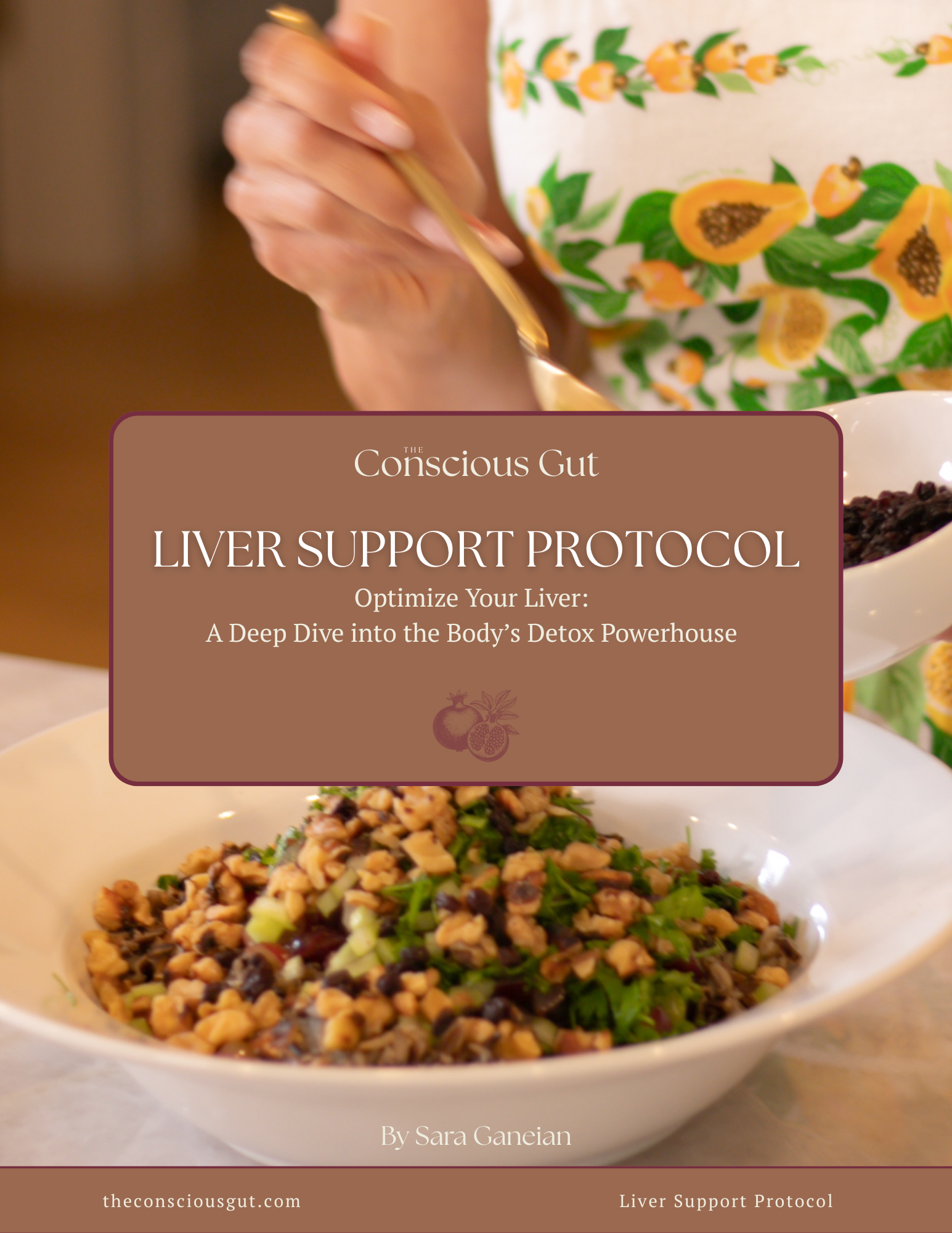
A science-informed guide to supporting your body’s natural detoxification systems.
Your liver is already your body’s primary detox organ. What it needs is targeted support, consistent nourishment, and reduced load so it can do what it’s designed to do — efficiently and safely.
The Liver Support Protocol is a practical, evidence-based framework created by Integrative Gut Health Specialist Sara Ganeian to help you support liver function through food, lifestyle, and daily rhythm — without restriction, deprivation, or extremes.
This protocol is especially supportive if you’re:
Feeling sluggish, inflamed, hormonally imbalanced, or “off” after the holidays
Experiencing bloating, skin issues, fatigue, or poor digestion
Curious about liver health but skeptical of detox trends
Ready to take your gut health seriously, starting at the root
What This Protocol Focuses On
Rather than forcing detoxification, this guide teaches you how to support the three phases of liver detoxification so your body can process and eliminate waste efficiently:
Supporting Phase I activation without creating excess oxidative stress
Nourishing Phase II conjugation pathways so toxins can be neutralized safely
Ensuring proper Phase III elimination through bile flow, gut health, and regular digestion
Because detox doesn’t end in the liver — it ends in the gut.
What’s Included
Inside the Liver Support Protocol, you’ll find:
Clear education on how liver detoxification actually works
Foods and nutrients that support each detox phase
Simple, nourishing recipes designed to support bile flow and elimination
A supportive grocery guide to reduce decision fatigue
Lifestyle foundations for liver health, including sleep, stress, and daily rhythm
Optional supplement guidance with an emphasis on safety and individualization
This is not a reset that shocks your system.
It’s a protocol that restores trust between your body, your liver, and your gut.
What You Can Expect
Many people report:
Improved digestion and less bloating
More stable energy throughout the day
Clearer skin and reduced inflammation
Better tolerance to food and alcohol over time
A greater sense of regulation instead of restriction
Results vary, but the goal is always the same: support function, not force change.
Ready to Transform Your Gut Health?
If you’re tired of feeling bloated, fatigued, or off-balance, your gut may be asking for more fiber, not more supplements.
Check out my 10-Day Gut Reset
Book a 1:1 consultation
and get a personalized strategy to optimize your gut health, hormone balance, and longevity.
Or explore free resources on The Conscious Guide for practical ways to start feeding your microbiome today.
Follow @theconsciousgut on Instagram